
Chapter Eight: The challenges of sustaining public oversight: The rise and fall of anti-surveillance activism in South Africa
Synopsis
This chapter focuses on the rise and fall of anti-surveillance activism in South Africa, from 2010 to date, as a form of public oversight of intelligence-driven surveillance. In 2010, the government attempted to introduce a highly controversial Bill, the Protection of Information Bill (Protection of Information Bill 2010), which threatened to give South Africa’s civilian intelligence agency, the State Security Agency (SSA), the powers to overclassify huge swathes of government information and cloak it in a shroud of secrecy: hence, its critics dubbed it the ‘Secrecy Bill’ (News24, 2011). The campaign against the Bill extracted major concessions from the government. However, once Jacob Zuma was replaced by Cyril Ramaphosa as president, anti-surveillance activism shrunk, making it difficult to consolidate the democratic gains made during that period. At the same time, more contained forms of contention, using more well-established forms of claim-making, such as strategic litigation, has won ground. In 2021, the fight against abusive surveillance culminated in a major legal victory against the government won by the amaBhungane Centre for Investigative Journalism in the highest court in South Africa, the Constitutional Court. This chapter study examines the rise and fall of anti-surveillance activism in South Africa as a form of public oversight. It seeks to answer two main questions: what factors contributed to the rise and fall of the highly effective anti-surveillance activism during Zuma’s presidency, followed by the success of strategic litigation? What lessons are to be learned from this failure and success for emerging practices of public oversight of intelligence-driven surveillance?
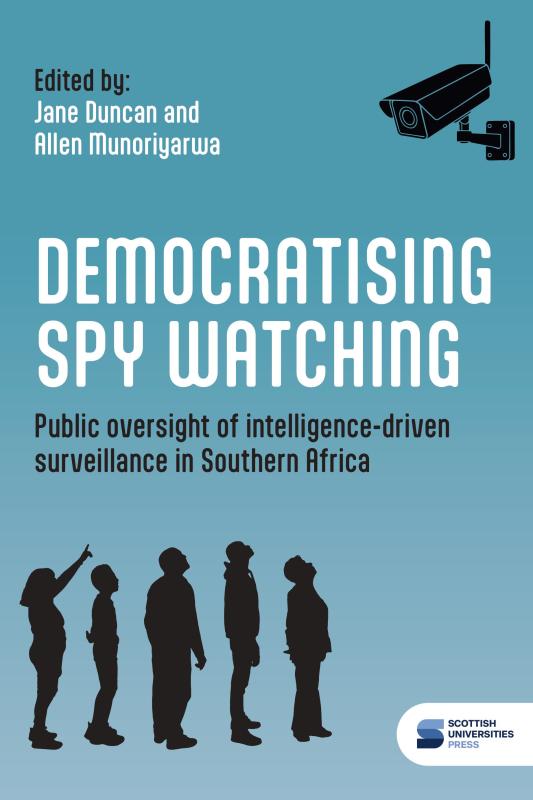
Forthcoming
Versions
- 11-02-2026 (2)
- 15-01-2026 (1)
License

This work is licensed under a Creative Commons Attribution-NonCommercial 4.0 International License.